Author: Amanda Moore
-
ChatGPT and Claude may give you more relevant answers when you tell them about your appendix cancer diagnosis. These appendix cancer AI instructions show you how to share that information, set rules for how AI answers you, and understand the risks.
-
Starting October 22, 2026, prescription drug importation by mail into the United States is expected to get much harder, and for many patients it may stop working altogether. Mailed packages of FDA-regulated products can no longer use the simple postal customs process. They now need either formal customs entry or a new electronic process called…
-
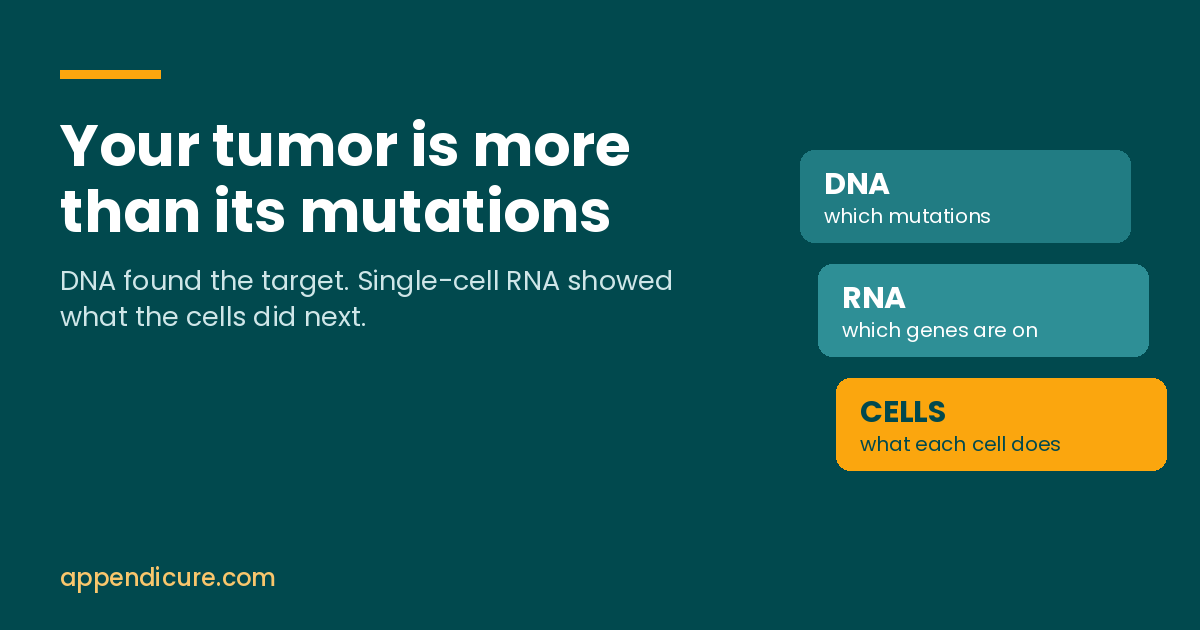
Short answer: A new MD Anderson study in appendiceal adenocarcinoma shows why looking beyond mutations matters. DNA testing found the KRAS mutation that made the tumors a target. Single-cell RNA sequencing then showed what the tumor cells and the cells around them did when KRAS was blocked, something no mutation report can tell you. If…
-

Short answer: Most people with appendix cancer who make the CRS/HIPEC decision don’t regret it. Caregivers carry a heavy load, though, and their regret is higher when their loved one dies. That comes from three studies: a 2024 patient study and a 2025 caregiver study from the University of New Mexico, and Yale’s DECISIVE study,…
-

Short answer: A fistula after CRS/HIPEC is an abnormal connection that forms after surgery. This article focuses mainly on enterocutaneous fistulas, where the bowel connects to the skin and bowel contents drain through an opening in the abdomen. In one large study of pseudomyxoma peritonei (PMP) patients, 2.4% developed an intestinal fistula. Some close without…
-

In the metformin PMP webinar on September 22, 2026, Dr. Oliver Eng of UC Irvine answered patient questions about his trial of metformin for pseudomyxoma peritonei (PMP). He covered who can join, the five in-person visits, cost, side effects, and whether patients taking palbociclib or a KRAS inhibitor can join. I hosted the session and…