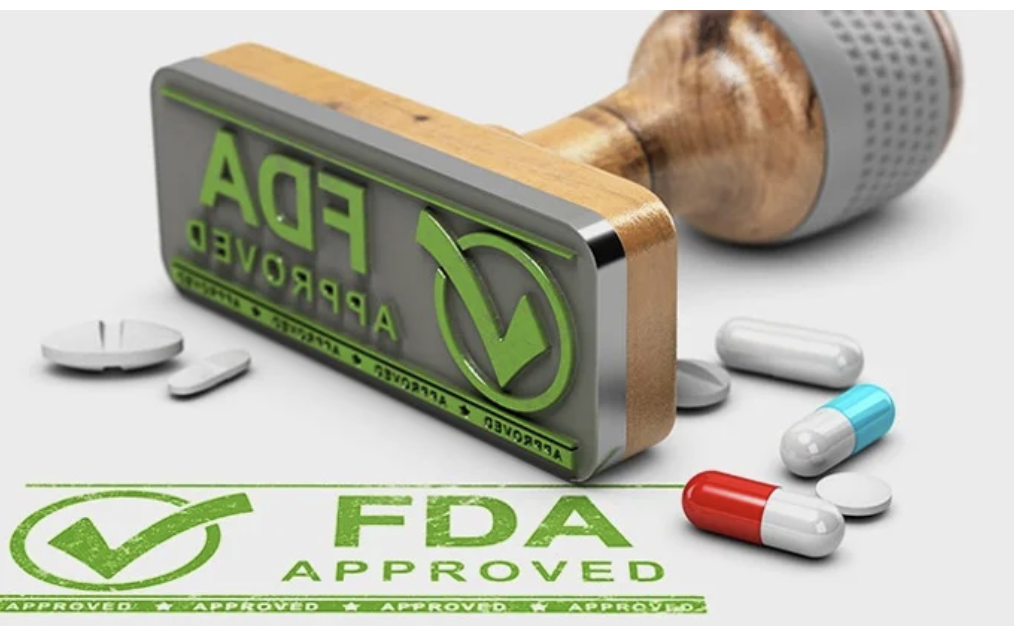

APPENDICURE · PATIENT EDUCATION
And why, for a rare cancer community, every approval somewhere else is a small lesson in what to watch for.
If you spend any time in appendix cancer communities, you have probably seen the same pattern. Someone shares a news article about a promising new drug. The headline sounds like a breakthrough. A few hours later, someone else posts that the same drug just hit a snag with the FDA. Neither one is wrong. They are both describing pieces of a process that takes years and almost never moves in a straight line.
This post is meant to demystify that process. Not to make anyone an expert, but to give you a frame you can use the next time a friend forwards you an article and asks what it means for our community.
We will use a real, current example to keep it concrete. A small biotech called Verastem is developing a KRAS G12D inhibitor called VS-7375. The FDA recently told the company it cannot take a shortcut to approval. The story made some investors unhappy, but for patients it is actually a useful window into how the system is supposed to work.
The basic path from idea to pharmacy shelf
Before any new drug reaches a patient, it has to move through a sequence of stages. The names of these stages get used loosely in news coverage, so it helps to keep them straight.
| Phase | What it answers | Typical size | Typical length |
|---|---|---|---|
| Phase 1 | Is it safe? What dose can people tolerate? | 20 to 80 patients | 1 to 2 years |
| Phase 2 | Does it actually shrink tumors or help people live longer? In which patients? | 100 to 300 patients | 2 to 3 years |
| Phase 3 | Is it better than the current standard of care? | 300 to several thousand patients | 3 to 5 years |
| Phase 4 | What happens once the drug is in the real world, in larger numbers of people? | Thousands, ongoing | Years after approval |
Most drugs that enter phase 1 never make it to approval. The drop-off is steep. Roughly nine out of ten cancer drugs that start phase 1 testing will fail somewhere along the way. That is not a sign that the system is broken. It is the system working. Each phase exists to catch problems that the earlier phases were not designed to find.
| What FDA approval actually means When the FDA approves a drug, it is making a specific judgment: the benefits, for a specific group of patients with a specific condition, outweigh the risks. That is it. Approval does not mean the drug works for everyone. It does not mean the drug works in cancers it was not tested in. And it does not mean the drug has been studied long enough to know every long-term effect. This is why off-label use exists, why expanded access programs exist, and why rare cancer patients so often end up watching trials in other cancers. The approval label is narrow by design. |
Why drug companies want shortcuts and why the FDA pushes back
Phase 3 trials are expensive. They take years. For patients with advanced cancer, those years matter. So the FDA has built faster paths for serious diseases when early data look strong.
The most common one is called accelerated approval. The idea is simple. If a drug shows a clear effect on something we can measure quickly, like tumor shrinkage, the FDA can approve it before the long studies on survival are finished. The company then has to keep running confirmatory trials to prove the early signal translates into actual benefit. If it does not, the approval can be pulled.
Drug companies like accelerated approval because it gets the drug to market faster. The FDA likes it when the disease is serious and the early data are strong. Patients with limited time often like it too. But it only works if the early data are reliable. And that is where the Verastem story gets interesting.
The Verastem story, in plain terms
Verastem is a small biotech company. It has been developing a drug called VS-7375 that targets a specific cancer mutation called KRAS G12D. KRAS mutations show up in a long list of cancers, including pancreatic, lung, colorectal, and yes, some appendiceal subtypes. KRAS G12D specifically is one of the most common KRAS variants in pancreatic cancer.
Verastem’s original plan was to run one big early-phase trial, enroll extra patients into it as the data looked promising, and use those expanded cohorts to ask the FDA for accelerated approval. That would have been the fast path.
The FDA said no. Or more precisely, the FDA said: if you actually want approval, you need to run separate phase 2 trials in each of the cancer types you want the drug approved for. One for pancreatic. One for non-small cell lung cancer. One for colorectal cancer. The company now expects an earliest possible filing in mid-2027, which is later than they originally hoped.
| This is not a setback for patients. It is the FDA enforcing the standard.… |
Investors read this as a slowdown. From the outside, it can look like one too. But it is worth asking what the FDA is actually doing here.
They are saying that an early-stage trial designed to test safety and find a dose is not the same thing as a trial designed to prove a drug works. Expanding the first kind of trial into something that supports a marketing application creates messy data. Different patients enter at different points, dose levels shift over time, and the comparison groups are not clean. For a brand new class of drug, in a tough cancer setting, the FDA wants cleaner evidence before letting the drug onto pharmacy shelves.
There is also a real-world reason to be cautious. The efficacy numbers Verastem’s partner has reported from earlier studies in China have moved around. At one conference in 2025, the reported response rate in pancreatic cancer was 52 percent. A few months later, with more patients and more follow-up, it was 41 percent, and that lower number included responses that had not yet been confirmed on a second scan. That kind of drift is normal as datasets mature. It is also exactly why the FDA does not want to approve a drug on a snapshot.
Why this matters even if the drug is not for our cancer
VS-7375 is not currently being studied in appendix cancer. The three trials Verastem is launching are in pancreatic, lung, and colorectal cancer. So why should anyone in our community care?
A few reasons.
First, KRAS mutations are common in appendiceal adenocarcinoma, particularly mucinous subtypes. Research shows KRAS mutations occur in nearly 80 percent of mucinous appendiceal adenocarcinomas, and roughly half of those are the G12D variant specifically. If a KRAS G12D inhibitor proves effective in pancreatic cancer, there is a real scientific basis for asking whether it could work for some appendix cancer patients too. That question only gets asked if the drug succeeds in the cancers it is being tested in first.
Second, the path Verastem is being asked to walk is the same path any drug would have to walk to reach appendix cancer patients. Understanding what phase 2 and phase 3 trials are for, and why the FDA insists on them, makes it easier to read news about any cancer drug, including the ones that may eventually matter to us directly.
Third, rare cancers often benefit from drugs developed for more common cancers. Pancreatic cancer has more research dollars, more patients, and more trial infrastructure than appendix cancer. When a drug works there, the door opens to test it in rarer cancers with similar biology. That is how molecular targeting has reshaped oncology over the last twenty years.
What to watch for in any cancer drug news story
Once you know the shape of the process, you can read these stories with a sharper eye. A few questions worth asking:
- What phase is the drug in? A phase 1 result is interesting. A phase 3 result is decisive. Coverage often blurs the difference.
- How many patients were studied? Twelve patients responding to a drug is a signal. Three hundred patients responding is evidence.
- What cancer was it tested in? A drug that works in lung cancer is not automatically a drug that works in appendix cancer, even if both tumors share a mutation.
- Were the responses confirmed? Confirmed responses, verified on a second scan, are more reliable than unconfirmed ones. Articles do not always say which is which.
- What does the FDA actually require to approve it? An accelerated approval is provisional. A full approval rests on harder evidence. A trial setback is not the same thing as the drug failing.
None of this requires a science degree. It just requires knowing what to look for.
Where Appendicure fits
This brings us to something practical.
Rare cancers are stuck in a hard loop. Drug companies do not study them because there are not enough patients. There are not enough patients in trials because the patients are scattered, often misdiagnosed, and rarely connected to research networks. The biology is heterogeneous, the data is fragmented, and the people who need answers are spread across hundreds of hospitals.
The way out of that loop is data. Real-world data, from real patients, gathered consistently enough that researchers and drug developers can actually use it. When the next KRAS inhibitor, or photoimmunotherapy agent, or molecular profiling tool comes around and someone asks whether it should be tested in appendix cancer, the answer depends on whether anyone can point to a usable patient population. Right now, for our community, the honest answer is often no.
| The Appendicure Patient-Led Global Data Registry Our registry is built so that patients and caregivers can contribute their own information directly. Diagnosis details, treatment history, molecular markers, surgical outcomes. The data belongs to the community and exists to make our cancer visible to researchers, clinicians, and drug developers.Every patient who registers makes it easier to answer the question that matters most when a new drug shows promise somewhere else: would it help us?If you are an appendix cancer patient or caregiver and you have not yet registered, please do. Visit appendicure.com to add your data. |
The honest bottom line
Drug approval is slow because it has to be. Trial setbacks are not always bad news. The FDA telling a company to run proper phase 2 trials is not a failure, it is the process working. The cancers that get studied first are not always the cancers that need treatment most, but the science that comes out of those studies often reaches us eventually.
In the meantime, the most useful thing any of us can do is stay informed, stay skeptical of headlines, and make sure our community is counted in the data that drives what gets studied next.
That last part is on us.
Continue Reading: When standard treatment runs out, a handful of legal pathways may open the door to investigational therapies. Here is what they actually are, how they work, and what to ask for. Right to Try, Compassionate Use, and Early Access: What Appendix Cancer Patients Should Know
| Sources U.S. Food and Drug Administration. The Drug Development Process. fda.gov.U.S. Food and Drug Administration. Accelerated Approval Program. fda.gov.Armstrong, M. “Verastem keeps investors waiting in KRAS.” ApexOnco, 11 May 2026.Strangmann et al. “KRAS inhibition is an effective therapy for appendiceal adenocarcinoma.” bioRxiv preprint, April 2026.Box et al. “Next batter up! Targeting cancers with KRAS-G12D mutations.” Trends in Cancer, 2023. |
SHARE THIS POST
If this helped you, it will help someone else. Forward it to a fellow patient or caregiver, or share it from the Appendicure Facebook page.
Leave a Reply