Skip to content
♥

Help us fund the research needed to find new treatments for appendix cancer.

Donate
  • Facebook
  • Instagram
  • LinkedIn
  • YouTube


RECENT POSTS

Why a Cheap Diabetes Pill Is Now Being Tested Against PMP

Who BromAc Actually Helps, and Who It Does Not

Appendix Cancer Chemotherapy After Surgery: MD Anderson Found No Evidence of Benefit in Localized Adenocarcinoma

  • Most appendix cancer patients were found by accident because there is no appendix cancer screening test · title: Appendix cancer screening gap
    • Appendix Cancer 101Your guide to understanding a rare disease, appendix cancer. Learn about types, symptoms, diagnosis, staging, and treatment options like surgery, HIPEC, and chemotherapy—all in one accessible, patient-friendly resource.
      • What is Appendix Cancer?Appendix cancer is a rare abdominal cancer. Learn how appendiceal cancer develops, how it’s diagnosed, and what treatment options exist. APPENDICURE raises awareness for research, recognizing symptoms, diagnosis, surgery, chemotherapy, HIPEC and PIPAC treatment options.
      • Glossary of Medical TermsDecode complex medical terms with our easy-to-understand glossary. Designed for patients and caregivers, this section explains the language used in appendix cancer diagnosis, treatment, surgery, and recovery. Decipher acronyms such as CRS, HIPEC, PIPAC, SRCC.
      • Types of Appendix CancerUnderstand the different forms of appendiceal cancer—from slow-growing tumors to aggressive variants—and what each diagnosis means for treatment and care of this rare appendix cancer. Become familiar medical terms – LAMN Low-grade Appendiceal Mucinous Neoplasm, HAMN High-grade Appendiceal Mucinous Neoplasm, HIPEC Hyperthermic Intraperitoneal Chemotherapy, CRS Cytoreductive Surgery, and SRCC Signet Ring Cell Adenocarcinoma.
      • Pseudomyxoma Peritonei (PMP)
      • Diagnosis & TreatmentFacing a rare gastric cancer can be overwhelming. This section offers clear, compassionate guidance on how appendix cancer is identified and the treatment paths available to you. Learn about chemo, hemicolectomy surgery, cytoreductive surgery CRS, HIPEC, clinical trials, and immunotherapy.
      • CDK4/6 Inhibitors and GNAS-Mutated Appendiceal Cancer
      • Research & InnovationsExplore the latest breakthroughs in appendix cancer—from emerging treatments to promising clinical trials. We spotlight progress that brings hope to patients, caregivers, and advocates. We share research on LAMN Low-grade Appendiceal Mucinous Neoplasm, HAMN High-grade Appendiceal Mucinous Neoplasm, HIPEC Hyperthermic Intraperitoneal Chemotherapy, CRS Cytoreductive Surgery, SRCC Signet Ring Cell Adenocarcinoma, PIPAC Pressurized Intraperitoneal Aerosolized Chemotherapy, Hemicolectomy, and more.
    • Patient & Caregiver ResourcesAPPENDICURE supports appendix cancer patients and caregivers with resources for medical centers, appendiceal surgical oncologists, and HIPEC certified specialists. From diagnosis to survivorship, explore resources designed to inform, uplift, and guide. Whether you’re a rare abdominal cancer patient or caregiver, you’re not alone—and you don’t have to figure it out alone.
      • Medical Centers & ProvidersFind hospitals, specialists, and care teams experienced in treating appendix cancer. We help connect you to the rare abdominal cancer and HIPEC expertise you deserve—because where you go matters. Appendiceal cancer medical and surgical oncologists will discuss diagnosis, treatment plans, and surgery options that align with current research.
      • Support NetworksYou’re not alone. Connect with others who understand the appendix cancer journey—through peer groups, online communities, and caregiver circles built around empathy and shared experience. Explore resources created by appendiceal cancer oncologists, research teams, and cancer awareness advocates that offer guidance on treatment options, financial assistance programs, emotional support groups, and survivorship tips.
      • WebinarsJoin expert-led sessions that break down complex topics, share lived experiences, and offer guidance for patients, caregivers, and advocates navigating appendix cancer. Ask questions about diagnosis, treatment, chemotherapy, hemicolectomy surgery, CRS surgery, HIPEC, PIPAC, caregiver roles, support groups, recovery processes, and spreading awareness.
      • Appendix Cancer Web ResourcesAccess trusted appendix cancer information, downloadable guides, caregiver tools, and appendiceal cancer advocacy materials—all in one place. These resources are designed to educate, empower, and support your cancer journey. We’ve collected resources for you covering treatment, and support on one convenient page.
      • Mental Health Support
      • Patient & Caregiver StoriesReal voices. Real journeys. Discover powerful stories from those affected by appendix cancer—offering hope, insight, and connection for every step of the appendiceal cancer path. Listen to our community of appendiceal cancer survivors as they share their journey through symptoms, diagnosis, treatment, surgery, HIPEC, and recovery.
    • Appendix Cancer Registry
    • For Researchers & Clinicians
      • Standard of Care: 2025 Guidelines
      • Clinician Guides by Specialty
      • Appendix Cancer for Pathologists
      • Registry for Investigators
      • Refer a Patient
      • Clinical Trials
    • Stay ConnectedSubscribe for updates on appendix cancer research, support resources, awareness, and upcoming events. Join our email list and follow us on social media to stay informed and inspired.
      • Blog PostsRead expert insights, patient stories, and the latest updates on appendix cancer care, research, and advocacy. Our blog is a source for appendiceal cancer education and community connection. Share our blog to spread appendix cancer awareness.
      • Data Registry & AI
    • Meet the TeamThe people behind APPENDICURE. Patients, caregivers, survivors, and advocates working to support the appendix cancer community.
      • Board of Directors
      • CUREator Crew
    • Contact UsConnect with the APPENDICURE team to learn more about appendix cancer, share your story, or get involved. We welcome inquiries from patients, caregivers, researchers, and anyone passionate about rare appendiceal cancer advocacy.
    Amanda Moore Avatar
    Amanda Moore

    Why a Colonoscopy Usually Misses Appendix Cancer

    July 17, 2026

    There is no appendix cancer screening test. A colonoscopy looks at the colon, and it can reach the opening of the appendix, but it cannot see inside the appendix, which is where these cancers usually begin. That is why most of us were found by accident.

    My husband David got lucky, and I do not use that word loosely. His tumor had grown out of his appendix and was pushing into his colon. During a colonoscopy, his doctor could actually see it. The doctor told us that normally you cannot see that far into that part of the colon, but nothing was in the way of the view that day. David’s GI doctor, the person who discovered the tumor, gave it to us as good news.

    “Good news. It’s appendix cancer. A quick snip in outpatient surgery and you will be home the same day, cancer free.”

    David’s GI doctor, the day he found the tumor

    It did not turn out to be a quick snip. David was already stage 3B by the time it was found, and it took a right hemicolectomy, not a same-day outpatient procedure. He is alive and well now, under watchful surveillance. Lucky. And I still think about how different things might have been if it had been caught earlier, on a first colonoscopy, before it ever grew far enough to come into view.

    That is the hard part. A colonoscopy did find David’s cancer. It just found it late, and only because the tumor had grown into a spot the scope happened to see. Nothing screened for it. Nothing was watching the appendix on purpose.

    Why a colonoscopy usually misses appendix cancer

    The appendix is a small, narrow, dead-end tube that branches off the colon. A colonoscopy travels through the colon and reaches the appendiceal orifice, which is the little opening where the appendix connects. That opening is the door. The scope reaches the door and looks right at it.

    The door is as far as it goes. The appendix is too narrow and too closed off for a colonoscope to enter, so the inside of the appendix is never seen. Appendix cancer usually starts inside that tube, in the wall and the lining, in the exact place the scope cannot reach.

    A colonoscopy reaches the door of the appendix but cannot go inside, which is why there is no reliable appendix cancer screening

    A colonoscopy can only catch it when the tumor has grown outward far enough to change the opening. Then a doctor might see a bulge at the orifice, mucus pushing out, or tissue that looks rough and bleeds easily. Those are later signs. Early disease shows nothing at the door. This is why the medical literature plainly says appendiceal cancer is rarely detected by colonoscopy. A normal colonoscopy is a colon test. It is not an appendix cancer screening test, and it was never built to be one.

    There is no appendix cancer screening test

    The colon has the colonoscopy. The breast has the mammogram. The cervix has the Pap test. The appendix has nothing. There is no appendix cancer screening test that catches it early in people who feel fine.

    So it gets found the hard way. It turns up during surgery for what looked like appendicitis. It shows up on a scan ordered for something unrelated. It hides behind symptoms that look like a hundred more common things. This is true across the appendiceal cancers, including low-grade and high-grade mucinous neoplasms, goblet cell adenocarcinoma, signet ring cell, and the neuroendocrine tumors. Different subtypes, same blind spot.

    Found by accident

    Connie Zickler’s pain started in 2016. Her scans and bloodwork showed nothing clear. In 2018 a doctor told her she had ovarian cancer and operated, and she woke up to be told it was not cancer after all. In 2021 the pain came back hard. The scans again pointed at her ovaries. She went through months of needle biopsies that all came back negative while the disease kept spreading. It took a specialist at a cancer center recognizing the pattern almost immediately to finally name it. It was appendix cancer, and it had been appendix cancer the whole time. Five years passed between her first pain and the right diagnosis. Two of those years were spent chasing the wrong cancer.

    Amy Jellison never had a symptom that pointed at her appendix. She had recurring urinary infections, heartburn, and nausea. A scan found a cyst on her ovary, and she was scheduled for a hysterectomy.

    “During the hysterectomy, my gynecologist removed my appendix, noting it looked abnormal.”

    Amy Jellison

    That was the only reason it was caught. The biopsy came back as a low-grade appendiceal mucinous neoplasm that had already spread beyond the appendix. If that surgeon had not looked twice at an organ she was not even operating on, it would have kept growing quietly.

    Colleen felt nothing at all. She was not in pain. Over months her abdomen swelled until she looked pregnant, and she was told it was weight gain and a slow metabolism. A scan finally sent her to the emergency room, where it was read as advanced ovarian cancer. It was not ovarian. It was a low-grade appendiceal mucinous neoplasm that had already spread through her abdomen.

    “It all started quietly. I was completely asymptomatic, no pain, no discomfort.”

    Colleen

    Jeremy Kitzhaber is a veteran. His first symptoms came in his early 40s, not long after he left the service. He had never heard of appendix cancer, and the local doctor he first saw did not recognize it either. By the time it had a name it was stage 4, and he has been living with it for more than a decade. Sometimes the problem is not that the scope cannot reach it. Sometimes it is that no one in the room has ever seen this disease before.

    “I didn’t even know this kind of cancer existed until it was me. My doctor didn’t know what it was either.”

    Jeremy Kitzhaber

    Colin Campbell is an offshore diver from a small island off the west coast of Scotland. At 47 he had real appendicitis, confirmed by his bloodwork and a CT scan. He expected the usual plan, remove the appendix and recover. Instead his surgeon pushed antibiotics and sent him home. Four months later, after the NHS refused him a second opinion, Colin borrowed money and paid privately to have his appendix taken out. Pathology found a ruptured low-grade appendiceal mucinous neoplasm. The cancer had been sitting inside the whole time. A small tumor in an inflamed appendix is nearly impossible to see on a scan, which is why for years a problem appendix was simply removed and examined. The operation was the safety net. The antibiotics cleared the infection and left the tumor behind.

    “I was not misdiagnosed. I genuinely had appendicitis. What I was denied was the chance to be diagnosed with the tumor that caused it.”

    Colin Campbell

    Amy Moeller was diagnosed with pseudomyxoma peritonei in 2012, at 38, and lived years past it. When it came back more than a decade later, it was surveillance imaging that caught the recurrence, not a screening program. Even after you are a patient, staying ahead of this disease still depends on scans and watchful follow-up, because there is still no test that screens for it in the first place.

    These are different people on completely different paths, and the same theme runs through all of them. Nobody was screened. Everybody was found by chance, by surgery, or by a doctor who happened to look closer. You can read more of these stories on the patient stories page, and the pattern repeats over and over.

    What we can do until there is an appendix cancer screening test

    I cannot hand you a screening test that does not exist yet. What I can tell you is that the way we get one is by showing the pattern. Right now the story of how appendix cancer gets found is scattered across thousands of individual patients who each felt alone and confused when it happened to them. When those stories sit together in one place, they stop being scattered and start being data.

    That is what the Patient-Led Global Appendix Cancer Registry is for. It gathers our molecular, pathology, and diagnostic details so researchers can study appendix cancer as its own disease instead of a footnote to colon cancer. More than 1,500 of us across 52 countries are already part of this community. Every story we add makes the picture clearer for the person who gets diagnosed next.

    So here is my ask. Tell us how your cancer was found. Add your details to the registry. We do this partly for ourselves, because we want better treatments in our own lifetimes. But we also do it for the people who come after us, so that one day appendix cancer gets caught before it becomes something a person has to battle for the rest of their life.

    Join the Patient-Led Global Appendix Cancer Registry

    Your details help researchers study appendix cancer on its own terms. It takes a few minutes, and it counts.

    Join the Registry: United States Join the Registry: International

    Common questions

    Can a colonoscopy detect appendix cancer?

    Sometimes, but not reliably. A colonoscopy can reach the opening of the appendix, but it cannot see inside the appendix where these cancers usually start. It tends to catch appendix cancer only after the tumor has grown out toward the opening, which is often late.

    Is there a screening test for appendix cancer?

    No. There is currently no appendix cancer screening test. Unlike colon, breast, or cervical cancer, there is no routine test that catches it early in people without symptoms.

    How is appendix cancer usually found?

    Most often by accident. It is commonly discovered during surgery for a suspected appendicitis, or on a scan ordered for an unrelated problem. Many people are misdiagnosed with other conditions first.

    If my colonoscopy was normal, am I cleared of appendix cancer?

    Not necessarily. A normal colonoscopy checks the colon. It does not rule out a tumor growing inside the appendix. If you have ongoing abdominal symptoms that no one can explain, it is reasonable to ask a specialist about the appendix specifically.

    Read more

    PET Scans and Appendix Cancer: Myth vs. Fact
    Blood Tests and Appendix Cancer: What Patients and Caregivers Need to Know
    Appendix Cancer 101: Diagnosis and Treatment
    Read more patient and caregiver stories

    0 0

    Share it!

    • Facebook
    • LinkedIn
    • X
    • Pinterest
    • Threads
    • WhatsApp
    • Reddit
    • Print
    • Email
    • SMS Text

    Stay informed about the latest research and patient stories.

    Log in
    Back to top arrow
  • Appendix cancer and early life: bold teal graphic asking whether people who had an unusual start to life get appendix cancer at different rates than everyone else, and whether anyone has ever looked.
    • Appendix Cancer 101Your guide to understanding a rare disease, appendix cancer. Learn about types, symptoms, diagnosis, staging, and treatment options like surgery, HIPEC, and chemotherapy—all in one accessible, patient-friendly resource.
      • What is Appendix Cancer?Appendix cancer is a rare abdominal cancer. Learn how appendiceal cancer develops, how it’s diagnosed, and what treatment options exist. APPENDICURE raises awareness for research, recognizing symptoms, diagnosis, surgery, chemotherapy, HIPEC and PIPAC treatment options.
      • Glossary of Medical TermsDecode complex medical terms with our easy-to-understand glossary. Designed for patients and caregivers, this section explains the language used in appendix cancer diagnosis, treatment, surgery, and recovery. Decipher acronyms such as CRS, HIPEC, PIPAC, SRCC.
      • Types of Appendix CancerUnderstand the different forms of appendiceal cancer—from slow-growing tumors to aggressive variants—and what each diagnosis means for treatment and care of this rare appendix cancer. Become familiar medical terms – LAMN Low-grade Appendiceal Mucinous Neoplasm, HAMN High-grade Appendiceal Mucinous Neoplasm, HIPEC Hyperthermic Intraperitoneal Chemotherapy, CRS Cytoreductive Surgery, and SRCC Signet Ring Cell Adenocarcinoma.
      • Pseudomyxoma Peritonei (PMP)
      • Diagnosis & TreatmentFacing a rare gastric cancer can be overwhelming. This section offers clear, compassionate guidance on how appendix cancer is identified and the treatment paths available to you. Learn about chemo, hemicolectomy surgery, cytoreductive surgery CRS, HIPEC, clinical trials, and immunotherapy.
      • CDK4/6 Inhibitors and GNAS-Mutated Appendiceal Cancer
      • Research & InnovationsExplore the latest breakthroughs in appendix cancer—from emerging treatments to promising clinical trials. We spotlight progress that brings hope to patients, caregivers, and advocates. We share research on LAMN Low-grade Appendiceal Mucinous Neoplasm, HAMN High-grade Appendiceal Mucinous Neoplasm, HIPEC Hyperthermic Intraperitoneal Chemotherapy, CRS Cytoreductive Surgery, SRCC Signet Ring Cell Adenocarcinoma, PIPAC Pressurized Intraperitoneal Aerosolized Chemotherapy, Hemicolectomy, and more.
    • Patient & Caregiver ResourcesAPPENDICURE supports appendix cancer patients and caregivers with resources for medical centers, appendiceal surgical oncologists, and HIPEC certified specialists. From diagnosis to survivorship, explore resources designed to inform, uplift, and guide. Whether you’re a rare abdominal cancer patient or caregiver, you’re not alone—and you don’t have to figure it out alone.
      • Medical Centers & ProvidersFind hospitals, specialists, and care teams experienced in treating appendix cancer. We help connect you to the rare abdominal cancer and HIPEC expertise you deserve—because where you go matters. Appendiceal cancer medical and surgical oncologists will discuss diagnosis, treatment plans, and surgery options that align with current research.
      • Support NetworksYou’re not alone. Connect with others who understand the appendix cancer journey—through peer groups, online communities, and caregiver circles built around empathy and shared experience. Explore resources created by appendiceal cancer oncologists, research teams, and cancer awareness advocates that offer guidance on treatment options, financial assistance programs, emotional support groups, and survivorship tips.
      • WebinarsJoin expert-led sessions that break down complex topics, share lived experiences, and offer guidance for patients, caregivers, and advocates navigating appendix cancer. Ask questions about diagnosis, treatment, chemotherapy, hemicolectomy surgery, CRS surgery, HIPEC, PIPAC, caregiver roles, support groups, recovery processes, and spreading awareness.
      • Appendix Cancer Web ResourcesAccess trusted appendix cancer information, downloadable guides, caregiver tools, and appendiceal cancer advocacy materials—all in one place. These resources are designed to educate, empower, and support your cancer journey. We’ve collected resources for you covering treatment, and support on one convenient page.
      • Mental Health Support
      • Patient & Caregiver StoriesReal voices. Real journeys. Discover powerful stories from those affected by appendix cancer—offering hope, insight, and connection for every step of the appendiceal cancer path. Listen to our community of appendiceal cancer survivors as they share their journey through symptoms, diagnosis, treatment, surgery, HIPEC, and recovery.
    • Appendix Cancer Registry
    • For Researchers & Clinicians
      • Standard of Care: 2025 Guidelines
      • Clinician Guides by Specialty
      • Appendix Cancer for Pathologists
      • Registry for Investigators
      • Refer a Patient
      • Clinical Trials
    • Stay ConnectedSubscribe for updates on appendix cancer research, support resources, awareness, and upcoming events. Join our email list and follow us on social media to stay informed and inspired.
      • Blog PostsRead expert insights, patient stories, and the latest updates on appendix cancer care, research, and advocacy. Our blog is a source for appendiceal cancer education and community connection. Share our blog to spread appendix cancer awareness.
      • Data Registry & AI
    • Meet the TeamThe people behind APPENDICURE. Patients, caregivers, survivors, and advocates working to support the appendix cancer community.
      • Board of Directors
      • CUREator Crew
    • Contact UsConnect with the APPENDICURE team to learn more about appendix cancer, share your story, or get involved. We welcome inquiries from patients, caregivers, researchers, and anyone passionate about rare appendiceal cancer advocacy.
    Amanda Moore Avatar
    Amanda Moore

    9 Overlooked Questions – Appendix Cancer and Early-Life Events

    July 14, 2026

    Around 9 in 10 appendix cancers have no known cause, and the disease is rising fast in younger people. This post looks at the appendix cancer early life question: whether an unusual event at the very start of life, like Rh disease or a newborn transfusion, could be part of the story, and why no one has studied it yet.

    Bear with me on this one. It started with my husband David. It wandered into medical research. It ended at a question I cannot find an answer to anywhere, and I want to put it in front of you, because you might be part of the answer.

    It started with David

    David was born in 1973 with Rh disease. His mother was Rh-negative. He was Rh-positive, which he inherited from his father. Those two do not mix. His mother’s immune system treated his blood as foreign and made antibodies against it. Those antibodies crossed into David before he was born and began destroying his red blood cells.

    It was serious. He needed a newborn blood transfusion to survive his first days. It was an exchange transfusion, where doctors slowly swap out the baby’s blood and replace it with donor blood.

    David was the fourth child. His three older sisters never went through this. That fits the pattern. Rh disease often gets worse with each pregnancy, so the later babies tend to be hit hardest. David drew the short straw.

    For most of his life this was just a piece of family history. Then he was diagnosed with appendix cancer, and I started looking at it differently.

    What I found in the research

    A baby who survives severe Rh disease goes through something intense in the first days of life. An immune system in overdrive. Red blood cells being destroyed. Very high bilirubin. A whole blood exchange. All of it lands during the exact window when the immune system and the gut are still forming.

    That window is where the appendix cancer early life question lives. Researchers now treat early life as a critical period for the kind of gastrointestinal cancers that are rising in younger people. This is not a fringe idea. There is a solid body of work showing that colorectal and other gut cancers are climbing in people born after about 1960, and that the trail leads back to early-life exposures, things like cesarean birth, birth weight, whether a baby was breastfed, and antibiotics in pregnancy or infancy. One clear, free-to-read summary is Early Life: An Important Window of Susceptibility for Colorectal Cancer, published in Gastroenterology in 2022.

    David’s own history is a different story, and I want to be straight about it. No one has studied whether Rh disease, a newborn exchange transfusion, or donor blood received as an infant changes cancer risk decades later. The research simply does not exist. What we do know is that the transfused donor cells are replaced by the body within a few months, and there is no established link between a newborn transfusion and any adult cancer. So I am not standing on evidence here. I am standing on a gap.

    Appendix Cancer Early Life: What Makes This Worth Asking

    Appendix cancer early life: bold teal graphic asking whether people who had an unusual start to life get appendix cancer at different rates than everyone else, and whether anyone has ever looked

    Appendix cancer is close to a blank slate. Around 9 in 10 cases have no known cause. The roughly 1 in 10 we can explain traces to inherited genetic risk. A 2022 study in JAMA Oncology found that about 11 percent of appendix cancer patients who were tested carried an inherited cancer-related gene variation. You can read it here: Inherited Cancer Susceptibility Gene Sequence Variations Among Patients With Appendix Cancer. That still leaves the large majority of appendix cancer early life cases unexplained.

    At the same time, appendix cancer is rising sharply in younger people, in Gen X and Millennials, for reasons researchers themselves call unexplained.

    When that little is known about what causes a cancer, and it is climbing in exactly the birth cohorts where early-life exposures are the leading suspect, then asking the appendix cancer early life question is not a stretch. It is a reasonable question.

    Let me be clear about what I am and am not saying. I am not saying Rh disease causes appendix cancer. I do not know that, and neither does anyone else. The simpler, more honest question is this. Do people who went through an unusual early-life event get appendix cancer at different rates than everyone else, and has anyone ever looked? As far as I can tell, on that last part, no one has. That is the gap. And that is the kind of question that, if enough of us point at it, can get a researcher’s attention.

    This is where you come in

    I want to see whether anything clusters in our community. Rh disease is only one possible early-life event. There are others. If any of these sound like your start in life, I would like to hear it.

    • Born premature, or at very high or very low birth weight
    • Rh disease or hemolytic disease of the newborn, meaning an Rh-negative mother
    • A newborn blood transfusion or exchange transfusion
    • Severe newborn jaundice, or treatment with blue lights (phototherapy)
    • Cesarean delivery
    • A NICU stay, or a serious illness or surgery as a newborn
    • Formula-fed instead of breastfed
    • Antibiotics during pregnancy or in infancy
    • A mother who smoked during pregnancy

    If you do not know your birth history, that is completely normal. Most of us do not. And “none of these that I know of” is just as useful for me to hear as a yes. I am not trying to prove anything. I am trying to see whether there is a pattern worth chasing.

    If you are willing to share, tell me your story, and your birth year if you know it. You can comment, message me, or add it to our patient registry below. This is exactly the kind of thing patient communities are good at and researchers cannot do alone. We notice things first. Let us see what we notice.

    Amanda

    Appendix Cancer Early Life: Common Questions

    Does Rh disease cause appendix cancer?

    No. There is no evidence that Rh disease, hemolytic disease of the newborn, or a newborn blood transfusion causes appendix cancer. No study has looked at whether these early events change cancer risk later in life. That gap is the question this post raises.

    What causes appendix cancer?

    For most people, the cause is unknown. Around 9 in 10 appendix cancers have no identified cause. About 11 percent of patients carry an inherited cancer-related gene variation, based on a 2022 study in JAMA Oncology.

    Is appendix cancer rising in younger people?

    Yes. Appendix cancer is climbing sharply in people born in Gen X and the Millennial generations, and researchers have not fully explained why. That rise in younger birth cohorts is part of what makes the appendix cancer early life question worth asking.

    What early-life events might be worth asking about?

    Premature birth, very high or very low birth weight, Rh disease, a newborn transfusion or exchange transfusion, severe jaundice treated with phototherapy, cesarean delivery, a NICU stay, formula feeding instead of breastfeeding, and antibiotics during pregnancy or infancy.

    Read more from Appendicure

    • Early Onset Appendix Cancer: What a New Adenocarcinoma Study Suggests
    • Appendix Cancer Genetic Testing: Why Dr. Shen Suggested a Germline Test for David
    • The Data That Could Help Doesn’t Exist Yet. We’re Building It.

    Add your story to the Patient-Led Global Appendix Cancer Registry

    Our registry is IRB-approved and actively enrolling. It takes a few minutes, and it is how a scattered community becomes data a researcher can use.

    United States: https://form.jotform.com/261653563455159

    International: https://form.jotform.com/261874541837063

    If you would rather support the work another way, you can donate here: https://givebutter.com/support-appendicure-5j7b3s

    0 0

    Share it!

    • Facebook
    • LinkedIn
    • X
    • Pinterest
    • Threads
    • WhatsApp
    • Reddit
    • Print
    • Email
    • SMS Text

    Stay informed about the latest research and patient stories.

    Log in
    Back to top arrow
  • Teal and white graphic reading The Largest Goblet Cell Adenocarcinoma Study Yet, 210 patients over 28 years, with a highlighted statistic of 56% five-year survival, branded Appendicure.
    • Appendix Cancer 101Your guide to understanding a rare disease, appendix cancer. Learn about types, symptoms, diagnosis, staging, and treatment options like surgery, HIPEC, and chemotherapy—all in one accessible, patient-friendly resource.
      • What is Appendix Cancer?Appendix cancer is a rare abdominal cancer. Learn how appendiceal cancer develops, how it’s diagnosed, and what treatment options exist. APPENDICURE raises awareness for research, recognizing symptoms, diagnosis, surgery, chemotherapy, HIPEC and PIPAC treatment options.
      • Glossary of Medical TermsDecode complex medical terms with our easy-to-understand glossary. Designed for patients and caregivers, this section explains the language used in appendix cancer diagnosis, treatment, surgery, and recovery. Decipher acronyms such as CRS, HIPEC, PIPAC, SRCC.
      • Types of Appendix CancerUnderstand the different forms of appendiceal cancer—from slow-growing tumors to aggressive variants—and what each diagnosis means for treatment and care of this rare appendix cancer. Become familiar medical terms – LAMN Low-grade Appendiceal Mucinous Neoplasm, HAMN High-grade Appendiceal Mucinous Neoplasm, HIPEC Hyperthermic Intraperitoneal Chemotherapy, CRS Cytoreductive Surgery, and SRCC Signet Ring Cell Adenocarcinoma.
      • Pseudomyxoma Peritonei (PMP)
      • Diagnosis & TreatmentFacing a rare gastric cancer can be overwhelming. This section offers clear, compassionate guidance on how appendix cancer is identified and the treatment paths available to you. Learn about chemo, hemicolectomy surgery, cytoreductive surgery CRS, HIPEC, clinical trials, and immunotherapy.
      • CDK4/6 Inhibitors and GNAS-Mutated Appendiceal Cancer
      • Research & InnovationsExplore the latest breakthroughs in appendix cancer—from emerging treatments to promising clinical trials. We spotlight progress that brings hope to patients, caregivers, and advocates. We share research on LAMN Low-grade Appendiceal Mucinous Neoplasm, HAMN High-grade Appendiceal Mucinous Neoplasm, HIPEC Hyperthermic Intraperitoneal Chemotherapy, CRS Cytoreductive Surgery, SRCC Signet Ring Cell Adenocarcinoma, PIPAC Pressurized Intraperitoneal Aerosolized Chemotherapy, Hemicolectomy, and more.
    • Patient & Caregiver ResourcesAPPENDICURE supports appendix cancer patients and caregivers with resources for medical centers, appendiceal surgical oncologists, and HIPEC certified specialists. From diagnosis to survivorship, explore resources designed to inform, uplift, and guide. Whether you’re a rare abdominal cancer patient or caregiver, you’re not alone—and you don’t have to figure it out alone.
      • Medical Centers & ProvidersFind hospitals, specialists, and care teams experienced in treating appendix cancer. We help connect you to the rare abdominal cancer and HIPEC expertise you deserve—because where you go matters. Appendiceal cancer medical and surgical oncologists will discuss diagnosis, treatment plans, and surgery options that align with current research.
      • Support NetworksYou’re not alone. Connect with others who understand the appendix cancer journey—through peer groups, online communities, and caregiver circles built around empathy and shared experience. Explore resources created by appendiceal cancer oncologists, research teams, and cancer awareness advocates that offer guidance on treatment options, financial assistance programs, emotional support groups, and survivorship tips.
      • WebinarsJoin expert-led sessions that break down complex topics, share lived experiences, and offer guidance for patients, caregivers, and advocates navigating appendix cancer. Ask questions about diagnosis, treatment, chemotherapy, hemicolectomy surgery, CRS surgery, HIPEC, PIPAC, caregiver roles, support groups, recovery processes, and spreading awareness.
      • Appendix Cancer Web ResourcesAccess trusted appendix cancer information, downloadable guides, caregiver tools, and appendiceal cancer advocacy materials—all in one place. These resources are designed to educate, empower, and support your cancer journey. We’ve collected resources for you covering treatment, and support on one convenient page.
      • Mental Health Support
      • Patient & Caregiver StoriesReal voices. Real journeys. Discover powerful stories from those affected by appendix cancer—offering hope, insight, and connection for every step of the appendiceal cancer path. Listen to our community of appendiceal cancer survivors as they share their journey through symptoms, diagnosis, treatment, surgery, HIPEC, and recovery.
    • Appendix Cancer Registry
    • For Researchers & Clinicians
      • Standard of Care: 2025 Guidelines
      • Clinician Guides by Specialty
      • Appendix Cancer for Pathologists
      • Registry for Investigators
      • Refer a Patient
      • Clinical Trials
    • Stay ConnectedSubscribe for updates on appendix cancer research, support resources, awareness, and upcoming events. Join our email list and follow us on social media to stay informed and inspired.
      • Blog PostsRead expert insights, patient stories, and the latest updates on appendix cancer care, research, and advocacy. Our blog is a source for appendiceal cancer education and community connection. Share our blog to spread appendix cancer awareness.
      • Data Registry & AI
    • Meet the TeamThe people behind APPENDICURE. Patients, caregivers, survivors, and advocates working to support the appendix cancer community.
      • Board of Directors
      • CUREator Crew
    • Contact UsConnect with the APPENDICURE team to learn more about appendix cancer, share your story, or get involved. We welcome inquiries from patients, caregivers, researchers, and anyone passionate about rare appendiceal cancer advocacy.
    Amanda Moore Avatar
    Amanda Moore

    The Largest Goblet Cell Adenocarcinoma Study Yet (over 200 people): What It Means for Patients

    July 11, 2026

    Goblet cell adenocarcinoma of the appendix is rare, and the evidence guiding its treatment has been thin. A new study from The Christie in Manchester is the largest look yet, following 210 patients for almost three decades. It gives doctors a much clearer picture of which patients are most likely to benefit from surgery, who benefits from chemotherapy, and how the tumor should be graded.

    FROM OUR COMMUNITY. Many people in the Appendicure community carry a goblet cell adenocarcinoma diagnosis and struggle to find research that speaks to it directly. This study is one of the few built on a large group of GCA patients. If you have faced this diagnosis, your experience belongs in the registry.

    Goblet cell adenocarcinoma, often shortened to GCA, makes up roughly 15 to 20 percent of appendix tumors. It tends to spread to the lining of the abdomen, called the peritoneum. Because it is uncommon, treatment has often been borrowed from colon cancer rather than built on evidence specific to the appendix. A study published in ESMO Open in 2026 by Strach and colleagues helps fill that gap.

    What the study did

    The team reviewed 210 patients treated for appendiceal GCA between 1993 and 2021. Expert pathologists re-examined the tissue and re-graded every case using current standards. At diagnosis, 60 percent of patients had disease that was still localized, and 40 percent already had spread to the peritoneum.

    Most patients had surgery. Cytoreductive surgery, paired with heated chemotherapy washed through the abdomen, known as CRS and HIPEC, was done in 135 patients, about 64 percent of the group. Systemic chemotherapy, the kind given through the bloodstream, was given to 85 patients, about 40 percent.

    What it found on survival

    Across the whole group, median overall survival was 80 months, and 56 percent of patients were alive at five years. Median follow-up was 75 months, so these numbers rest on long observation rather than a short snapshot.

    Stage made a big difference in how patients did. Patients whose disease was still localized at diagnosis had a median survival of 193 months. Patients who already had peritoneal spread had a median survival of 25 months. Positive lymph nodes also pointed to worse outcomes.

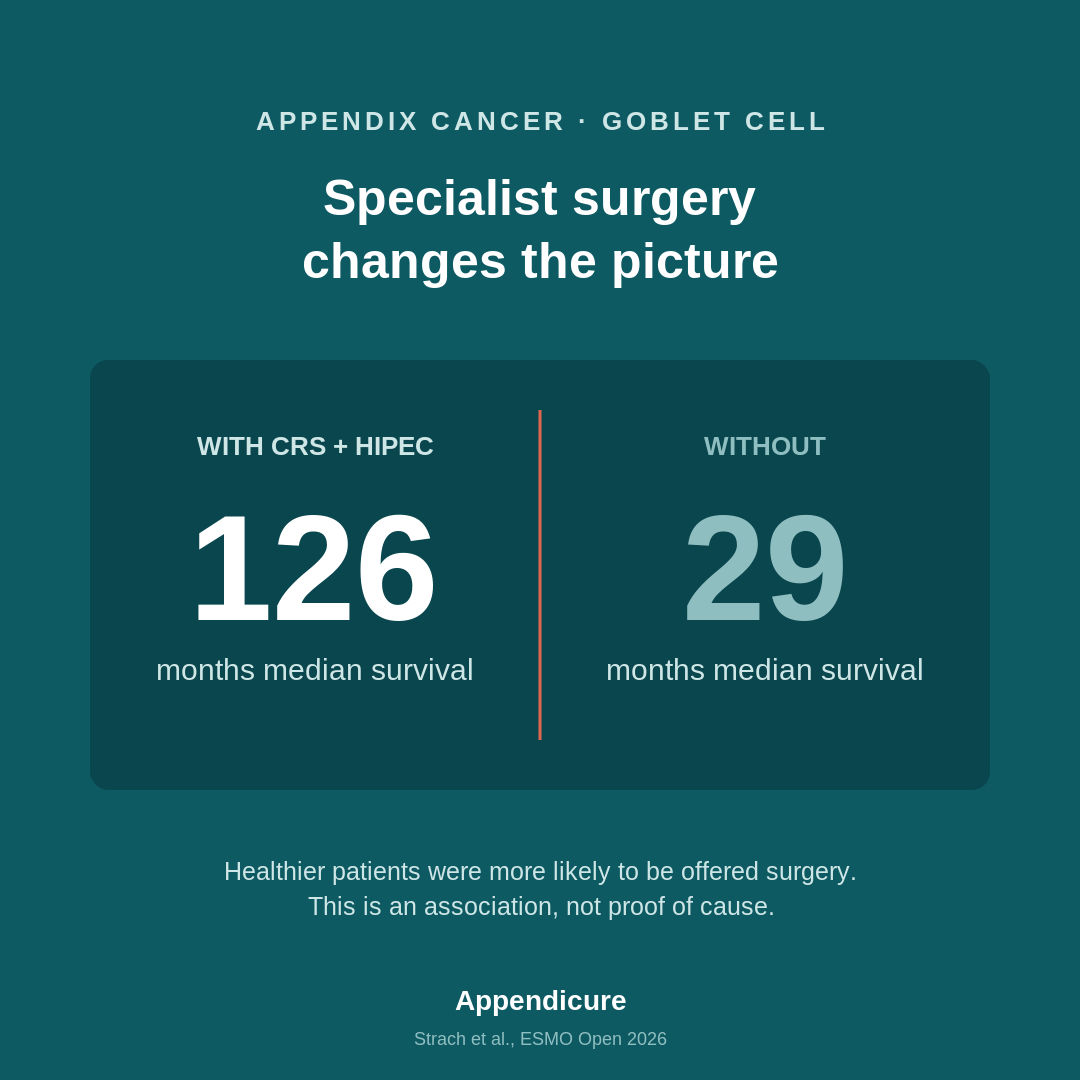
    Surgery was also linked to longer survival. Patients who had CRS and HIPEC had a median survival of 126 months, with 69 percent alive at five years. Patients who did not have that surgery had a median survival of 29 months, with 35 percent alive at five years. Healthier patients with less disease were more likely to be offered surgery, so this is an association, not proof that surgery alone produced the gap. Even so, the pattern matches what specialist centers have reported.

    Teal graphic headed Specialist surgery changes the picture, comparing 126 months median survival with CRS plus HIPEC against 29 months without, noting the difference is an association not proof of cause, branded Appendicure

    KEY TAKEAWAY. In the largest GCA cohort to date, patients treated with cytoreductive surgery and HIPEC had a median survival of 126 months, compared with 29 months for those who did not. Patient selection shaped who received surgery, so read the gap as a strong signal, not final proof.

    The chemotherapy finding needs context

    On paper, patients who received systemic chemotherapy had shorter survival. That is easy to misread. Chemotherapy was mostly given to patients with the highest-risk disease, including those with spread that could not be fully removed. The treatment was not causing the worse outcome. The worse outcome was the reason the treatment was given. Researchers call this selection bias, and the authors flag it directly.

    A closer look showed where chemotherapy did help. Patients with high-grade tumors, patients with positive lymph nodes, and patients left with residual disease after surgery derived benefit. The authors also point to a separate registry study, not part of this Manchester cohort, that found node-positive patients who received chemotherapy after surgery had a five-year survival of 77 percent, compared with 43 percent for those who did not. Taken together, these findings suggest chemotherapy is most useful for selected higher-risk patients rather than everyone with GCA.

    The study also looked at how well chemotherapy worked. Only about 5 percent of tumors actually shrank with first-line chemotherapy, although another group achieved stable disease for an overall disease control rate of 24 percent. That underlines why careful patient selection matters more than treating everyone the same way.

    This does not mean chemotherapy does not work for GCA. It means the patients receiving chemotherapy were often the sickest patients to begin with, which makes simple comparisons misleading.

    Another important finding involved tumor grading

    Grading describes how aggressive a tumor looks under the microscope. For GCA, the current World Health Organization 2019 system sorts tumors into three grades. This study found that system did a poor job of separating patients by outcome in several groups.

    The researchers compared several different grading systems before concluding that a simpler two-tiered approach may work better and should now be tested by other centers. They split tumors into two groups based on whether more than half of the tissue showed a high-grade pattern. This two-tiered method separated patients by outcome better in this study. The authors recommend testing it in other centers before it could replace the current system.

    For patients, the takeaway is smaller but real. Grading is hard, even for expert pathologists, and the labels are still being refined. If a diagnosis is unclear, or a treatment decision hinges on grade, a second pathology review at a specialist center is reasonable to request.

    What this study cannot tell us

    This is the largest non-registry cohort of appendiceal GCA reported to date, and its long follow-up gives it weight. It is also retrospective and drawn from a single specialist center. Some records had missing details, and a few subgroups were small. It cannot prove cause and effect the way a randomized trial can. It adds important evidence in a disease where high-quality studies are still uncommon, and it points to questions worth testing next.

    Questions to bring to your team

    These questions fit this study’s findings. Some may already be part of your conversations. Take what is useful.

    1. What is my tumor grade, and is my disease considered low grade or high grade?
    2. What is my lymph node status, and does it change whether chemotherapy is likely to help me?
    3. Am I a candidate for cytoreductive surgery with HIPEC, and is it available at a specialist center near me?
    4. If I have surgery, what is the goal for removing all visible disease?
    5. Would a second pathology review at a specialist center help confirm my grade?

    Why your data matters

    A study like this is possible because one specialist center tracked 210 patients over decades. Most appendix cancer patients are scattered across health systems that never compare notes. That is the exact gap the Patient-Led Global Appendix Cancer Registry is built to close. When patients pool their diagnosis, grade, treatment, and outcomes, researchers can ask better questions about rare subtypes like GCA across many centers instead of just one. The registry now has IRB approval and an exempt determination, and your information is handled with care.

    Add your data to the registry

    Joining takes a few minutes and it is open worldwide. There are two ways to join, one for participants in the United States and one for everyone else.

    Join the Registry: United States Join the Registry: International

    You can also support this work at the Appendicure donation page: givebutter.com/support-appendicure-5j7b3s

    Glossary

    Goblet cell adenocarcinoma (GCA). A rare appendix cancer that tends to spread to the lining of the abdomen.

    CRS and HIPEC. Cytoreductive surgery to remove visible tumor, followed by heated chemotherapy washed through the abdomen to target cells left behind.

    Peritoneum. The lining of the abdominal cavity. Spread to the peritoneum is called peritoneal metastasis.

    Overall survival. The length of time patients live after diagnosis or treatment, often reported as a median or a five-year percentage.

    Grade. A measure of how abnormal tumor cells look and how aggressively the disease tends to behave.

    Source

    Strach MC, Aziz O, Nonaka D, et al. Long-term outcomes, pathological classification and prognostic factors in localised and advanced appendiceal goblet cell adenocarcinoma following cytoreductive surgery, intraperitoneal and systemic chemotherapy. ESMO Open. 2026;11(7):108245. Open access. https://doi.org/10.1016/j.esmoop.2026.108245

    Read more

    Experts Didn’t Agree on Goblet Cell Adenocarcinoma Grade in 16 of 20 Cases
    Appendix Cancer Expert Centers and the Case for Sharing Every Story

    Medical disclaimer. This post is for educational purposes only and is not medical advice. Research on appendix cancer evolves quickly. Treatment decisions should always be made with a qualified medical team familiar with your case. Appendicure is a 501(c)(3) nonprofit dedicated to appendiceal cancer patient education and advocacy and is not a medical provider.

    0 0

    Share it!

    • Facebook
    • LinkedIn
    • X
    • Pinterest
    • Threads
    • WhatsApp
    • Reddit
    • Print
    • Email
    • SMS Text

    Stay informed about the latest research and patient stories.

    Log in
    Back to top arrow
  • Dark teal Appendicure graphic with bold text reading Reading Tumor Grade From a CT Scan, and a subtitle about delayed-phase CT and AI in pseudomyxoma peritonei.
    • Appendix Cancer 101Your guide to understanding a rare disease, appendix cancer. Learn about types, symptoms, diagnosis, staging, and treatment options like surgery, HIPEC, and chemotherapy—all in one accessible, patient-friendly resource.
      • What is Appendix Cancer?Appendix cancer is a rare abdominal cancer. Learn how appendiceal cancer develops, how it’s diagnosed, and what treatment options exist. APPENDICURE raises awareness for research, recognizing symptoms, diagnosis, surgery, chemotherapy, HIPEC and PIPAC treatment options.
      • Glossary of Medical TermsDecode complex medical terms with our easy-to-understand glossary. Designed for patients and caregivers, this section explains the language used in appendix cancer diagnosis, treatment, surgery, and recovery. Decipher acronyms such as CRS, HIPEC, PIPAC, SRCC.
      • Types of Appendix CancerUnderstand the different forms of appendiceal cancer—from slow-growing tumors to aggressive variants—and what each diagnosis means for treatment and care of this rare appendix cancer. Become familiar medical terms – LAMN Low-grade Appendiceal Mucinous Neoplasm, HAMN High-grade Appendiceal Mucinous Neoplasm, HIPEC Hyperthermic Intraperitoneal Chemotherapy, CRS Cytoreductive Surgery, and SRCC Signet Ring Cell Adenocarcinoma.
      • Pseudomyxoma Peritonei (PMP)
      • Diagnosis & TreatmentFacing a rare gastric cancer can be overwhelming. This section offers clear, compassionate guidance on how appendix cancer is identified and the treatment paths available to you. Learn about chemo, hemicolectomy surgery, cytoreductive surgery CRS, HIPEC, clinical trials, and immunotherapy.
      • CDK4/6 Inhibitors and GNAS-Mutated Appendiceal Cancer
      • Research & InnovationsExplore the latest breakthroughs in appendix cancer—from emerging treatments to promising clinical trials. We spotlight progress that brings hope to patients, caregivers, and advocates. We share research on LAMN Low-grade Appendiceal Mucinous Neoplasm, HAMN High-grade Appendiceal Mucinous Neoplasm, HIPEC Hyperthermic Intraperitoneal Chemotherapy, CRS Cytoreductive Surgery, SRCC Signet Ring Cell Adenocarcinoma, PIPAC Pressurized Intraperitoneal Aerosolized Chemotherapy, Hemicolectomy, and more.
    • Patient & Caregiver ResourcesAPPENDICURE supports appendix cancer patients and caregivers with resources for medical centers, appendiceal surgical oncologists, and HIPEC certified specialists. From diagnosis to survivorship, explore resources designed to inform, uplift, and guide. Whether you’re a rare abdominal cancer patient or caregiver, you’re not alone—and you don’t have to figure it out alone.
      • Medical Centers & ProvidersFind hospitals, specialists, and care teams experienced in treating appendix cancer. We help connect you to the rare abdominal cancer and HIPEC expertise you deserve—because where you go matters. Appendiceal cancer medical and surgical oncologists will discuss diagnosis, treatment plans, and surgery options that align with current research.
      • Support NetworksYou’re not alone. Connect with others who understand the appendix cancer journey—through peer groups, online communities, and caregiver circles built around empathy and shared experience. Explore resources created by appendiceal cancer oncologists, research teams, and cancer awareness advocates that offer guidance on treatment options, financial assistance programs, emotional support groups, and survivorship tips.
      • WebinarsJoin expert-led sessions that break down complex topics, share lived experiences, and offer guidance for patients, caregivers, and advocates navigating appendix cancer. Ask questions about diagnosis, treatment, chemotherapy, hemicolectomy surgery, CRS surgery, HIPEC, PIPAC, caregiver roles, support groups, recovery processes, and spreading awareness.
      • Appendix Cancer Web ResourcesAccess trusted appendix cancer information, downloadable guides, caregiver tools, and appendiceal cancer advocacy materials—all in one place. These resources are designed to educate, empower, and support your cancer journey. We’ve collected resources for you covering treatment, and support on one convenient page.
      • Mental Health Support
      • Patient & Caregiver StoriesReal voices. Real journeys. Discover powerful stories from those affected by appendix cancer—offering hope, insight, and connection for every step of the appendiceal cancer path. Listen to our community of appendiceal cancer survivors as they share their journey through symptoms, diagnosis, treatment, surgery, HIPEC, and recovery.
    • Appendix Cancer Registry
    • For Researchers & Clinicians
      • Standard of Care: 2025 Guidelines
      • Clinician Guides by Specialty
      • Appendix Cancer for Pathologists
      • Registry for Investigators
      • Refer a Patient
      • Clinical Trials
    • Stay ConnectedSubscribe for updates on appendix cancer research, support resources, awareness, and upcoming events. Join our email list and follow us on social media to stay informed and inspired.
      • Blog PostsRead expert insights, patient stories, and the latest updates on appendix cancer care, research, and advocacy. Our blog is a source for appendiceal cancer education and community connection. Share our blog to spread appendix cancer awareness.
      • Data Registry & AI
    • Meet the TeamThe people behind APPENDICURE. Patients, caregivers, survivors, and advocates working to support the appendix cancer community.
      • Board of Directors
      • CUREator Crew
    • Contact UsConnect with the APPENDICURE team to learn more about appendix cancer, share your story, or get involved. We welcome inquiries from patients, caregivers, researchers, and anyone passionate about rare appendiceal cancer advocacy.
    Amanda Moore Avatar
    Amanda Moore

    Reading Pseudomyxoma Peritonei Grade From a CT Scan: 1 Promising Study

    July 11, 2026

    Pseudomyxoma peritonei grade shapes almost every decision that follows a diagnosis, and it usually comes only after surgery. A new open-access study asks whether a routine CT scan, read with the help of AI, can estimate pseudomyxoma peritonei grade before the operation. The early answer is promising, and worth understanding, even though nothing here is ready for the clinic yet.

    FROM OUR COMMUNITY. Many people in the Appendicure community learn their tumor grade only after surgery, once the pathologist has looked at the tissue. Grade shapes so much of what comes next, so the question of whether a scan could hint at it earlier is one a lot of us have wondered about. If you have thought about this, your experience belongs in the registry.

    Pseudomyxoma peritonei grade is one of the most important words in an appendix cancer diagnosis. A low-grade tumor and a high-grade tumor can look similar on a report and behave in completely different ways. Grade helps guide how aggressive treatment should be, how closely someone is watched afterward, and how surgical teams plan an operation. The catch is that grade is usually confirmed by looking at tumor tissue under a microscope, which means waiting for a biopsy or for the surgery itself.

    A study published in BMC Medical Imaging on July 28, 2025, tested a different starting point. The researchers, from Aerospace Center Hospital in Beijing, asked whether the information already sitting inside a preoperative CT scan could estimate grade on its own, before anyone picks up a scalpel.

    What the study did

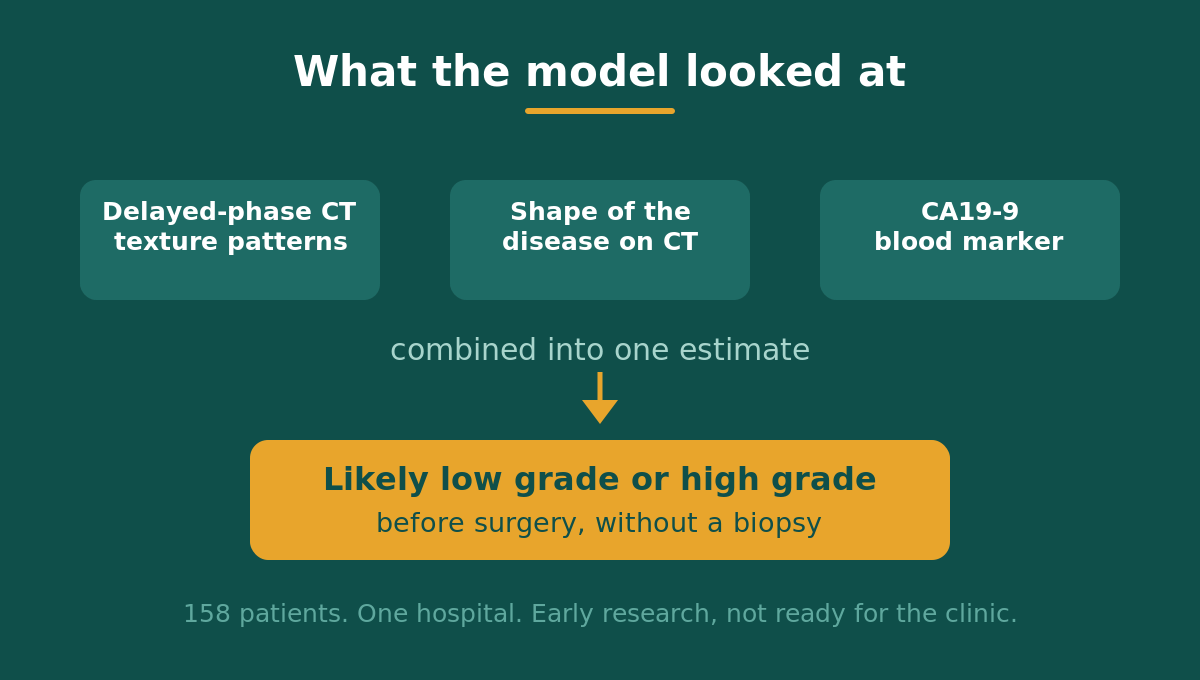
    The team reviewed 158 patients with pathologically confirmed pseudomyxoma peritonei of appendiceal origin, treated between January 2015 and April 2024. Eighty-five had low-grade disease and 73 had high-grade disease. Every patient had a preoperative contrast-enhanced CT scan, and the researchers focused on the delayed phase, which is the set of images taken a while after the contrast dye is injected, when it has had time to settle into the tissue.

    They used a technique called radiomics. Radiomics pulls hundreds of measurements out of a scan that the human eye cannot see, things like texture, density patterns, and the shape of the disease. Those measurements get fed into a computer model that learns which patterns line up with which grade. The team also folded in routine clinical data, including the blood markers CEA, CA19-9, and CA125, and the CT-based estimate of how much disease was present.

    They built three versions of the model. One used only the clinical data. One used only the imaging. And one combined both. Then they tested how well each version told low-grade disease apart from high-grade disease.

    Diagram showing that the model combined delayed-phase CT texture, the shape of the disease on CT, and the CA19-9 blood marker to estimate whether pseudomyxoma peritonei is low grade or high grade before surgery, based on 158 patients at one hospital

    What it found

    The combined model did best at estimating pseudomyxoma peritonei grade. It reached an AUC of 0.91 when it was being trained and 0.88 when it was tested on cases it had not seen. AUC is a score from 0.5 to 1.0 that measures how well a test separates two groups, where 0.5 is a coin flip and 1.0 is perfect. A test score near 0.88 is considered strong. The combined model clearly beat the imaging-only and clinical-only versions, and it stayed well calibrated, meaning its confidence levels matched what actually happened.

    The researchers also used a method called SHAP to see which features carried the most weight. The three that mattered most were two CT texture and shape measurements and the CA19-9 blood marker. The takeaway is that no single number did the work. The scan and the bloodwork together told a fuller story than either one alone.

    KEY TAKEAWAY. A model built from a delayed-phase CT scan plus routine bloodwork estimated pseudomyxoma peritonei grade, low versus high, with an AUC of 0.88 on testing. That is a strong early result for a tool that needs no biopsy, though it has only been shown at one center so far.

    A word about how this study defined pseudomyxoma peritonei grade

    This study sorted patients into two buckets, low grade and high grade. That is a common shortcut in research, but it does not match how appendiceal disease is actually graded in careful practice. The standard-of-care framing that Appendicure follows, the 2025 Godfrey consensus guidelines, preserves a three-tier system. Moderately differentiated disease sits in the middle and should not be quietly folded into the high-grade group.

    This matters for anyone reading a study like this. A model trained on a two-tier split of pseudomyxoma peritonei grade has never been asked to recognize that middle tier. So even if the numbers look strong, the tool as built cannot speak to where a moderately graded tumor would land. That is a real gap, not a small footnote, and it is worth keeping in mind before treating any two-tier result as the whole picture.

    What this could mean for patients

    The appeal here is timing. Knowing something about pseudomyxoma peritonei grade before surgery, rather than after, could help a care team plan. It might inform how extensive an operation to prepare for, how to counsel a patient about what to expect, or when a second opinion on the surgical plan makes sense. A scan-based estimate would never replace pathology, which remains the real answer. It would be an early clue, available at a point when there are no other clues.

    It is also worth noting what this approach uses. A delayed-phase contrast CT and standard blood markers are things many patients already have on file. The study is not asking for exotic testing. It is trying to squeeze more information out of scans that are already being done.

    What this study cannot tell us

    This is early work. It comes from a single hospital, it looked back at past cases rather than following patients forward, and 158 patients is a small group for training and testing a model of this kind. The results have not been checked at other centers, and models like this often lose some accuracy when they meet scans from different machines and different radiology teams.

    This is also not the first attempt at the same idea. An earlier study used a different CT feature, the pattern of disease coating the omentum, to estimate grade and reported similar accuracy. So this line of research is building, not breaking new ground. The honest way to read it is as one more careful step toward a tool that does not exist yet, rather than a finished test anyone can ask for today.

    Most important, none of this changes care right now. There is no approved scan-based tool for pseudomyxoma peritonei grade in appendix cancer. Grade still comes from pathology, and treatment decisions still belong with an experienced multidisciplinary team.

    Questions to bring to your team

    These questions fit this study’s findings. Some may already be part of your conversations. Take what is useful.

    1. What is known about my pseudomyxoma peritonei grade right now, and how was it determined?
    2. Does my care team use a three-tier grading system, and where does my disease fall within it?
    3. Have my imaging and blood markers, like CEA, CA19-9, and CA125, been reviewed together as part of planning?
    4. Are any imaging-based or AI tools being used or studied at my center to help with surgical planning?
    5. How does my grade shape the plan for surgery and for follow-up afterward?

    Why your data matters

    A study like this is only possible because one hospital happened to have 158 scans and matched pathology in one place. Most appendix cancer patients are scattered across health systems that never compare notes. That is the exact gap the Patient-Led Global Appendix Cancer Registry is built to close. When patients pool their diagnosis, imaging history, treatment, and outcomes, researchers can ask better questions and test tools that estimate pseudomyxoma peritonei grade across many centers instead of just one. The registry now has IRB approval and an exempt determination, and your information is handled with care.

    If you want your experience counted, you can add it here:

    United States: https://form.jotform.com/261653563455159

    International: https://form.jotform.com/261874541837063

    ADD YOUR STORY. Joining the registry takes a few minutes and helps researchers study appendix cancer subtypes that are too rare for any single hospital to figure out alone.

    Glossary

    Pseudomyxoma peritonei (PMP). A condition where mucinous tumor spreads through the lining of the abdomen, most often from a tumor of the appendix.

    Grade. A measure of how abnormal tumor cells look and how aggressively the disease tends to behave. Appendiceal disease is graded across three tiers, from low to high.

    Delayed-phase CT. Images taken later in a contrast CT scan, after the dye has had time to move into the tissue.

    Radiomics. A method that extracts many hidden measurements from a scan, such as texture and shape, and feeds them into a computer model.

    AUC. A score from 0.5 to 1.0 for how well a test separates two groups. Higher is better, and 0.5 is no better than a guess.

    SHAP. A way of showing which features a model leaned on most when it made a prediction.

    Source

    Wang Z, et al. A radiomics-based interpretable model integrating delayed-phase CT and clinical features for predicting the pathological grade of appendiceal pseudomyxoma peritonei. BMC Medical Imaging. 2025;25:300. Open access. https://doi.org/10.1186/s12880-025-01843-6

    Keep reading: PET Scans and Appendix Cancer, Myth vs Fact and Watching for What Comes Back, How AI Could Change Recurrence Monitoring in Appendix Cancer.

    Medical disclaimer. This post is for educational purposes only and is not medical advice. Research on appendix cancer evolves quickly. Treatment decisions should always be made with a qualified medical team familiar with your case. Appendicure is a 501(c)(3) nonprofit dedicated to appendiceal cancer patient education and advocacy and is not a medical provider.

    0 0

    Share it!

    • Facebook
    • LinkedIn
    • X
    • Pinterest
    • Threads
    • WhatsApp
    • Reddit
    • Print
    • Email
    • SMS Text

    Stay informed about the latest research and patient stories.

    Log in
    Back to top arrow
  • Dark teal graphic with the headline Why Appendix Cancer Slips Past the Immune System, with the words Immune System in gold
    • Appendix Cancer 101Your guide to understanding a rare disease, appendix cancer. Learn about types, symptoms, diagnosis, staging, and treatment options like surgery, HIPEC, and chemotherapy—all in one accessible, patient-friendly resource.
      • What is Appendix Cancer?Appendix cancer is a rare abdominal cancer. Learn how appendiceal cancer develops, how it’s diagnosed, and what treatment options exist. APPENDICURE raises awareness for research, recognizing symptoms, diagnosis, surgery, chemotherapy, HIPEC and PIPAC treatment options.
      • Glossary of Medical TermsDecode complex medical terms with our easy-to-understand glossary. Designed for patients and caregivers, this section explains the language used in appendix cancer diagnosis, treatment, surgery, and recovery. Decipher acronyms such as CRS, HIPEC, PIPAC, SRCC.
      • Types of Appendix CancerUnderstand the different forms of appendiceal cancer—from slow-growing tumors to aggressive variants—and what each diagnosis means for treatment and care of this rare appendix cancer. Become familiar medical terms – LAMN Low-grade Appendiceal Mucinous Neoplasm, HAMN High-grade Appendiceal Mucinous Neoplasm, HIPEC Hyperthermic Intraperitoneal Chemotherapy, CRS Cytoreductive Surgery, and SRCC Signet Ring Cell Adenocarcinoma.
      • Pseudomyxoma Peritonei (PMP)
      • Diagnosis & TreatmentFacing a rare gastric cancer can be overwhelming. This section offers clear, compassionate guidance on how appendix cancer is identified and the treatment paths available to you. Learn about chemo, hemicolectomy surgery, cytoreductive surgery CRS, HIPEC, clinical trials, and immunotherapy.
      • CDK4/6 Inhibitors and GNAS-Mutated Appendiceal Cancer
      • Research & InnovationsExplore the latest breakthroughs in appendix cancer—from emerging treatments to promising clinical trials. We spotlight progress that brings hope to patients, caregivers, and advocates. We share research on LAMN Low-grade Appendiceal Mucinous Neoplasm, HAMN High-grade Appendiceal Mucinous Neoplasm, HIPEC Hyperthermic Intraperitoneal Chemotherapy, CRS Cytoreductive Surgery, SRCC Signet Ring Cell Adenocarcinoma, PIPAC Pressurized Intraperitoneal Aerosolized Chemotherapy, Hemicolectomy, and more.
    • Patient & Caregiver ResourcesAPPENDICURE supports appendix cancer patients and caregivers with resources for medical centers, appendiceal surgical oncologists, and HIPEC certified specialists. From diagnosis to survivorship, explore resources designed to inform, uplift, and guide. Whether you’re a rare abdominal cancer patient or caregiver, you’re not alone—and you don’t have to figure it out alone.
      • Medical Centers & ProvidersFind hospitals, specialists, and care teams experienced in treating appendix cancer. We help connect you to the rare abdominal cancer and HIPEC expertise you deserve—because where you go matters. Appendiceal cancer medical and surgical oncologists will discuss diagnosis, treatment plans, and surgery options that align with current research.
      • Support NetworksYou’re not alone. Connect with others who understand the appendix cancer journey—through peer groups, online communities, and caregiver circles built around empathy and shared experience. Explore resources created by appendiceal cancer oncologists, research teams, and cancer awareness advocates that offer guidance on treatment options, financial assistance programs, emotional support groups, and survivorship tips.
      • WebinarsJoin expert-led sessions that break down complex topics, share lived experiences, and offer guidance for patients, caregivers, and advocates navigating appendix cancer. Ask questions about diagnosis, treatment, chemotherapy, hemicolectomy surgery, CRS surgery, HIPEC, PIPAC, caregiver roles, support groups, recovery processes, and spreading awareness.
      • Appendix Cancer Web ResourcesAccess trusted appendix cancer information, downloadable guides, caregiver tools, and appendiceal cancer advocacy materials—all in one place. These resources are designed to educate, empower, and support your cancer journey. We’ve collected resources for you covering treatment, and support on one convenient page.
      • Mental Health Support
      • Patient & Caregiver StoriesReal voices. Real journeys. Discover powerful stories from those affected by appendix cancer—offering hope, insight, and connection for every step of the appendiceal cancer path. Listen to our community of appendiceal cancer survivors as they share their journey through symptoms, diagnosis, treatment, surgery, HIPEC, and recovery.
    • Appendix Cancer Registry
    • For Researchers & Clinicians
      • Standard of Care: 2025 Guidelines
      • Clinician Guides by Specialty
      • Appendix Cancer for Pathologists
      • Registry for Investigators
      • Refer a Patient
      • Clinical Trials
    • Stay ConnectedSubscribe for updates on appendix cancer research, support resources, awareness, and upcoming events. Join our email list and follow us on social media to stay informed and inspired.
      • Blog PostsRead expert insights, patient stories, and the latest updates on appendix cancer care, research, and advocacy. Our blog is a source for appendiceal cancer education and community connection. Share our blog to spread appendix cancer awareness.
      • Data Registry & AI
    • Meet the TeamThe people behind APPENDICURE. Patients, caregivers, survivors, and advocates working to support the appendix cancer community.
      • Board of Directors
      • CUREator Crew
    • Contact UsConnect with the APPENDICURE team to learn more about appendix cancer, share your story, or get involved. We welcome inquiries from patients, caregivers, researchers, and anyone passionate about rare appendiceal cancer advocacy.
    Amanda Moore Avatar
    Amanda Moore

    Why Appendix Cancer Slips Past the Immune System

    July 10, 2026

    A new study helps explain appendix cancer immune escape, the way these tumors slip past the very cells that are built to destroy them. It points to one reason appendix cancer can be so hard for the body to control. The findings are early. No one was treated. But they open a door that appendix cancer research has not really walked through before.

    When I read a study like this, the first thing I check is whether it is actually about appendix cancer or borrowed from somewhere else. This one is about appendiceal adenocarcinoma, one of the main appendix cancer subtypes, and it looks squarely at appendix cancer immune escape using real tumor tissue.

    The cells that are supposed to fight cancer

    The immune system has a set of cells called natural killer cells, or NK cells for short. They are the body’s first responders for cancer. They do not wait for instructions. When they spot a cell that looks wrong, they move in and kill it. Strong NK cell activity has been tied to better control of several stomach and bowel cancers. Until now, almost no one had looked at what these cells do in appendix cancer.

    What the researchers did

    The study was published in Annals of Surgical Oncology on July 6, 2026. The team studied appendiceal adenocarcinoma that had spread to the lining of the abdomen, which doctors call peritoneal metastasis. They used a method called single-cell RNA sequencing. That method reads what each individual cell is doing, one cell at a time. It let the researchers pull the NK cells out of these tumors and study them closely.

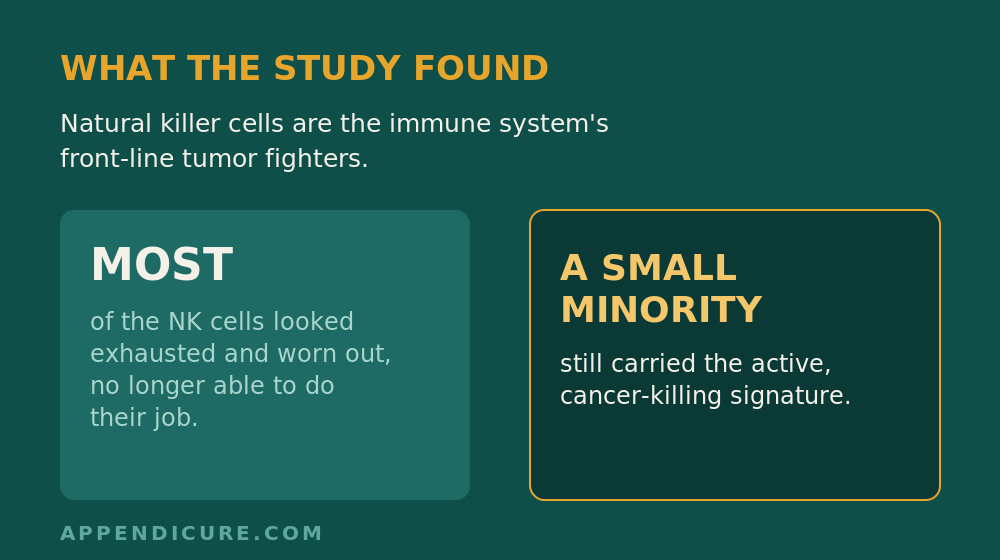
    Appendix cancer immune escape shown in two panels: most natural killer cells looked exhausted while only a small minority kept an active cancer-killing signature

    What they found

    Most of the NK cells were not doing their job. They carried a pattern that scientists call exhaustion. An exhausted immune cell is still there, but it has run out of fight. Only a small share of the NK cells still looked like true killers, the kind that can find and destroy tumor cells. The tumor had worn down the immune cells that were supposed to stop it. This is what appendix cancer immune escape looks like at the level of a single cell.

    Why this matters for appendix cancer immune escape

    This is the first close look at NK cells in appendix cancer, and it matters for two reasons. First, it treats appendix cancer as its own disease. Too much appendix cancer care is borrowed from colon cancer, even though the two behave differently. Studies like this build the case for treatments designed for appendix cancer on its own terms. Second, it points to a possible target. If the NK cells are exhausted rather than gone, there may be a way to wake them back up. The authors call this NK cell functional rescue. It is an idea worth testing, not a treatment anyone can ask for today.

    The honest limits

    A few honest limits belong here. This was a study of cells and their gene activity, not a trial in people. No patient was given a new drug. The work builds on an earlier single-cell study of appendiceal adenocarcinoma from the same research network, so the number of tumors involved is still small. What it offers is a direction, backed by real appendix cancer tissue, not a promise.

    One caution on who this covers. The study looked at appendiceal adenocarcinoma that had spread to the abdomen. It does not tell us about goblet cell adenocarcinoma, signet ring cell, neuroendocrine tumors, or low-grade mucinous neoplasms. Those are different diseases, and the immune picture may not be the same.

    The paper carries a name familiar to this community. Dr. John Paul Shen of MD Anderson, who sits on the Appendicure board, is one of the authors. The work also involves researchers at the University of California, Irvine, the University of California, San Diego, and MD Anderson. This is the kind of appendix-specific science the registry was built to support. You can read the full research letter here.

    None of this changes care right now. Surgery remains the backbone of treatment for appendiceal adenocarcinoma, with heated chemotherapy in the abdomen, known as HIPEC, for some patients, in line with the 2025 Godfrey consensus guidelines. Immune-based approaches for appendix cancer are still in the lab. This study is a reason to keep watching how researchers work on appendix cancer immune escape.

    Add your data to the registry

    If you or someone you love has appendix cancer, the strongest thing you can do for research like this is add your data. The Patient-Led Global Appendix Cancer Registry gives scientists the appendix-specific information that studies like this one depend on. It takes just a few minutes and it is open worldwide.

    United States: form.jotform.com/261653563455159

    International: form.jotform.com/261874541837063

    You can also support this work at the Appendicure donation page: givebutter.com/support-appendicure-5j7b3s

    Related reading

    How new drugs for appendix cancer are discovered

    What KRAS means for appendix cancer treatment

    Why treatment at an appendix cancer expert center matters

    0 0

    Share it!

    • Facebook
    • LinkedIn
    • X
    • Pinterest
    • Threads
    • WhatsApp
    • Reddit
    • Print
    • Email
    • SMS Text

    Stay informed about the latest research and patient stories.

    Log in
    Back to top arrow
  • Dark green graphic with an amber accent bar and DNA helix reading KRAS Inhibition in Appendiceal Cancer, a new MD Anderson study in plain language, from Appendicure.
    • Appendix Cancer 101Your guide to understanding a rare disease, appendix cancer. Learn about types, symptoms, diagnosis, staging, and treatment options like surgery, HIPEC, and chemotherapy—all in one accessible, patient-friendly resource.
      • What is Appendix Cancer?Appendix cancer is a rare abdominal cancer. Learn how appendiceal cancer develops, how it’s diagnosed, and what treatment options exist. APPENDICURE raises awareness for research, recognizing symptoms, diagnosis, surgery, chemotherapy, HIPEC and PIPAC treatment options.
      • Glossary of Medical TermsDecode complex medical terms with our easy-to-understand glossary. Designed for patients and caregivers, this section explains the language used in appendix cancer diagnosis, treatment, surgery, and recovery. Decipher acronyms such as CRS, HIPEC, PIPAC, SRCC.
      • Types of Appendix CancerUnderstand the different forms of appendiceal cancer—from slow-growing tumors to aggressive variants—and what each diagnosis means for treatment and care of this rare appendix cancer. Become familiar medical terms – LAMN Low-grade Appendiceal Mucinous Neoplasm, HAMN High-grade Appendiceal Mucinous Neoplasm, HIPEC Hyperthermic Intraperitoneal Chemotherapy, CRS Cytoreductive Surgery, and SRCC Signet Ring Cell Adenocarcinoma.
      • Pseudomyxoma Peritonei (PMP)
      • Diagnosis & TreatmentFacing a rare gastric cancer can be overwhelming. This section offers clear, compassionate guidance on how appendix cancer is identified and the treatment paths available to you. Learn about chemo, hemicolectomy surgery, cytoreductive surgery CRS, HIPEC, clinical trials, and immunotherapy.
      • CDK4/6 Inhibitors and GNAS-Mutated Appendiceal Cancer
      • Research & InnovationsExplore the latest breakthroughs in appendix cancer—from emerging treatments to promising clinical trials. We spotlight progress that brings hope to patients, caregivers, and advocates. We share research on LAMN Low-grade Appendiceal Mucinous Neoplasm, HAMN High-grade Appendiceal Mucinous Neoplasm, HIPEC Hyperthermic Intraperitoneal Chemotherapy, CRS Cytoreductive Surgery, SRCC Signet Ring Cell Adenocarcinoma, PIPAC Pressurized Intraperitoneal Aerosolized Chemotherapy, Hemicolectomy, and more.
    • Patient & Caregiver ResourcesAPPENDICURE supports appendix cancer patients and caregivers with resources for medical centers, appendiceal surgical oncologists, and HIPEC certified specialists. From diagnosis to survivorship, explore resources designed to inform, uplift, and guide. Whether you’re a rare abdominal cancer patient or caregiver, you’re not alone—and you don’t have to figure it out alone.
      • Medical Centers & ProvidersFind hospitals, specialists, and care teams experienced in treating appendix cancer. We help connect you to the rare abdominal cancer and HIPEC expertise you deserve—because where you go matters. Appendiceal cancer medical and surgical oncologists will discuss diagnosis, treatment plans, and surgery options that align with current research.
      • Support NetworksYou’re not alone. Connect with others who understand the appendix cancer journey—through peer groups, online communities, and caregiver circles built around empathy and shared experience. Explore resources created by appendiceal cancer oncologists, research teams, and cancer awareness advocates that offer guidance on treatment options, financial assistance programs, emotional support groups, and survivorship tips.
      • WebinarsJoin expert-led sessions that break down complex topics, share lived experiences, and offer guidance for patients, caregivers, and advocates navigating appendix cancer. Ask questions about diagnosis, treatment, chemotherapy, hemicolectomy surgery, CRS surgery, HIPEC, PIPAC, caregiver roles, support groups, recovery processes, and spreading awareness.
      • Appendix Cancer Web ResourcesAccess trusted appendix cancer information, downloadable guides, caregiver tools, and appendiceal cancer advocacy materials—all in one place. These resources are designed to educate, empower, and support your cancer journey. We’ve collected resources for you covering treatment, and support on one convenient page.
      • Mental Health Support
      • Patient & Caregiver StoriesReal voices. Real journeys. Discover powerful stories from those affected by appendix cancer—offering hope, insight, and connection for every step of the appendiceal cancer path. Listen to our community of appendiceal cancer survivors as they share their journey through symptoms, diagnosis, treatment, surgery, HIPEC, and recovery.
    • Appendix Cancer Registry
    • For Researchers & Clinicians
      • Standard of Care: 2025 Guidelines
      • Clinician Guides by Specialty
      • Appendix Cancer for Pathologists
      • Registry for Investigators
      • Refer a Patient
      • Clinical Trials
    • Stay ConnectedSubscribe for updates on appendix cancer research, support resources, awareness, and upcoming events. Join our email list and follow us on social media to stay informed and inspired.
      • Blog PostsRead expert insights, patient stories, and the latest updates on appendix cancer care, research, and advocacy. Our blog is a source for appendiceal cancer education and community connection. Share our blog to spread appendix cancer awareness.
      • Data Registry & AI
    • Meet the TeamThe people behind APPENDICURE. Patients, caregivers, survivors, and advocates working to support the appendix cancer community.
      • Board of Directors
      • CUREator Crew
    • Contact UsConnect with the APPENDICURE team to learn more about appendix cancer, share your story, or get involved. We welcome inquiries from patients, caregivers, researchers, and anyone passionate about rare appendiceal cancer advocacy.
    Amanda Moore Avatar
    Amanda Moore

    KRAS Inhibition in Appendiceal Cancer: What the New Study Shows

    July 9, 2026
    KRAS inhibition in appendiceal cancer, a new MD Anderson study explained in plain language by Appendicure

    A new study on KRAS inhibition in appendiceal cancer is now published in the Journal of Hematology & Oncology, one of the top journals in cancer medicine. The work comes from Dr. JP Shen’s lab at MD Anderson. Dr. Shen serves on Appendicure’s board, and he shared the news with me directly. The results are promising. They also have real limits.

    Why KRAS inhibition in appendiceal cancer matters

    KRAS is a gene. When it mutates, it can tell cancer cells to keep growing. It shows up a lot in appendix cancer. In mucinous appendiceal tumors, roughly 80 percent carry a KRAS mutation. The most common version is called G12D. For a long time, KRAS was seen as impossible to drug. That has started to change. New medicines can now block certain KRAS mutations. This study set out to test whether those medicines work against appendix cancer.

    What the study found in the lab

    Most of the work happened in the lab. The team grew appendix tumors two ways. They used organoids, which are tiny tumor models grown from patient tissue. They also used mice carrying human tumors. Then they tested two KRAS drugs. One is MRTX1133, which targets the G12D mutation. The other is daraxonrasib (RMC-6236), a broader inhibitor that blocks several forms of RAS, not just one mutation. Both drugs strongly suppressed the tumors. The team could see the drugs hit their target and shut down the growth signal. The treated tumors had fewer dividing cells and more cancer cell death.

    What the study found in people

    The paper also reports early results from a group of 15 patients treated with KRAS inhibitors. The patients were a mix, some had prior treatment and some had not. Among those who could be measured, every one showed a benefit. Tumor markers in the blood came down fast, by an average of more than 80 percent within the first 12 weeks. On imaging, one patient had a complete response, one had a partial response, and the rest had stable disease. For a cancer with so few options, that is a real signal.

    Dr. John Paul Shen, MD Anderson, senior author of the KRAS inhibition in appendiceal cancer study
    “Appendiceal cancer has long lacked effective systemic treatment options, and patients urgently need new approaches. I am very excited about the future prospects of KRAS inhibition. This study is just the first step.” — John Paul Shen, M.D., MD Anderson Cancer Center

    The honest part

    I don’t want anyone to read more into this than what’s there. Most of the strong results are preclinical. That means they happened in organoids and mice, not in people. Lab results don’t always hold up once a drug reaches patients. The patient group here was small and early. There’s no FDA approval for these drugs in appendix cancer. There’s no appendix-specific trial for these drugs open yet either. These tumors can also adapt and resist the drugs over time. The paper points to a pathway called EMT as one way that resistance takes hold. So the picture is promising, but it isn’t simple.

    Why this still matters

    Appendix cancer has few proven treatment options. Most standards were borrowed from colon cancer. The 2025 Godfrey consensus guidelines are the closest thing the field has to a standard of care built for appendix cancer, and even those leave big gaps. Research aimed straight at appendix cancer is rare. This study is aimed straight at it. It gives doctors a real target to build on. It also gives this community a reason to push for a trial. This work was peer reviewed, which means independent experts checked it and found it sound. That’s a real step forward.

    What happens next

    If you or a loved one has a KRAS mutation, this is worth saving to talk through with your oncologist. It’s not a treatment recommendation. It’s a signpost for where the science is heading. KRAS inhibition in appendiceal cancer is still early, but for the first time it is aimed straight at us.

    Read more

    • KRAS G12D and Appendix Cancer – New Developments
    • Appendix Cancer AI: How KRAS Drug Discovery Could Change Treatment

    Help move this research forward

    One of the best ways to speed up research is data. The Patient-Led Global Appendix Cancer Registry is now IRB-approved and collecting information from patients around the world. Your data helps researchers like Dr. Shen ask better questions. Join the registry here:

    Join the registry — United States Join the registry — International

    Support this work with a donation →

    Study: Chowdhury S, Ito I, Pattalachinti VK, Yousef AMG, Yousef MMG, El Khoury S, Hornstein N, Seldomridge AN, Hong D, Overman MJ, Taggart MW, Foo WC, Helmink B, Fournier KF, Shen JP. “KRAS inhibition is an effective therapy for appendiceal adenocarcinoma.” Journal of Hematology & Oncology, published July 2, 2026. DOI: 10.1186/s13045-026-01817-3. Read the paper.

    0 0

    Share it!

    • Facebook
    • LinkedIn
    • X
    • Pinterest
    • Threads
    • WhatsApp
    • Reddit
    • Print
    • Email
    • SMS Text

    Stay informed about the latest research and patient stories.

    Log in
    Back to top arrow
Previous Page
1 … 5 6 7 8 9 … 28
Next Page

The content provided on the APPENDICURE website is intended for informational and educational purposes only. It is not a substitute for professional medical advice, diagnosis, or treatment. We encourage readers to consult qualified healthcare providers to discuss any medical concerns. This site does not offer comprehensive medical guidance and should not be used in place of advice from your physician or care team.

APPENDICURE, a NON-Profit organization, follows best practices and guidelines to ensure compliance and maintain transparency. For questions, please contact us.

Appendicure Logo - Amber Ribbon on a Dark Green Background

CONTACT US

Copyright © 2025 APPENDICURE

All Rights Reserved

Privacy Policy | Terms of Use | Accessibility

GDPR Compliant – EU & UK Representative, verified by Euverify
Loading Comments...